
Food before Medicine
What illness reminds me about eating and healing

For this month’s post, I was planning to write about something else in the beginning. I had scheduled a few time slots to work on it, but I ended up being sick most of the time and simply couldn’t. My son has been very generous in sharing all his viruses with me. Having a child has taught me, if anything, that in front of life, I am not in control. And I’m starting to accept that. So instead of sticking to my original idea, I decided to talk about illness and food.
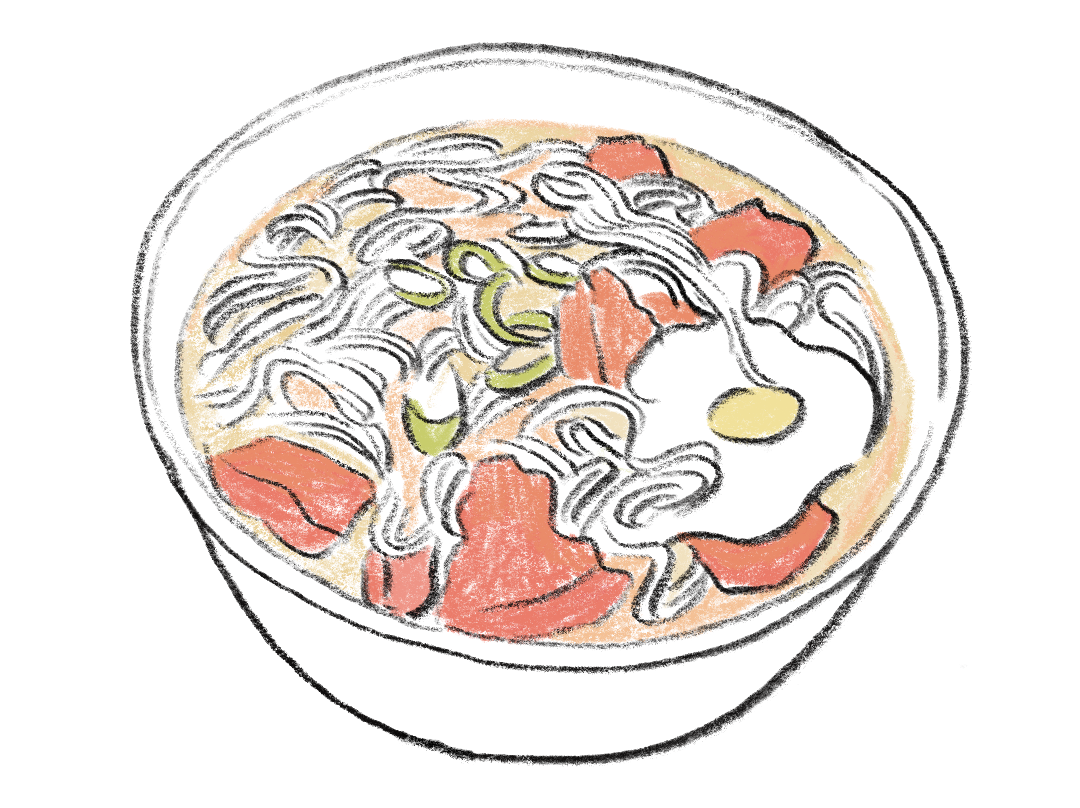
Being sick makes me feel like a child again. My stomach wants to “go home,” and the fastest way home is comfort food. Most of the time I would crave congee, or noodle soup, especailly I found myself craving the plain tomato-and-egg noodle soup my mother used to make for me when I had a fever and lost appetite. She used very little oil or seasoning so it stayed light, and she chose thin wheat noodles so they were easy to digest. “Eat some, You’ll feel stronger after.” she would say.” If I found it too plain, she would add white pepper and salt. I was also allowed to eat sweets and snacks I normally “didn’t have the right to eat”. So, strangely, being sick is connected in my memory not only with discomfort, but also with comfort and small guilty pleasures.
Apart from bringing comfort, food is also the first treatment I could think of (I’ve drawn a comic on the subject before). In traditional Chinese thought, “食药同源” is a concept which means “food and medicine share the same origin”. There is no strict line between what you eat and what you use to heal. Everyday ingredients can nourish the body and help prevent or correct imbalances, not just treat illness after it appears. That’s why the first thing that comes to mind when I’m sick is always food: ginger and brown sugar water for fever; pear soup for coughing; yam and millet congee when my stomach feels off; jujube and goji berries tea when I feel a lack of energy. Some foods are considered cooling (bitter melon, pear), others warming (jujube, ginger). People choose what to eat based on their body constitution and the season. In summer, cooling foods are meant to help the body release heat. In winter, warming foods are meant to protect and restore it. These associations can feel complicated to remember, but they come naturally to me, because I have lived them again and again while growing up.

Out of curiosity, I asked my French partner what he ate when he was sick as a child. He said: medicine? It made me giggle, but also realized how different attitudes toward medicine are in France and in China. Growing up Chinese, I was taught “是药三分毒” — “every medicine is partly toxic.” Medicine is usually something to avoid unless it’s truly necessary. Food is used to adjust and rebalance the body before it gets ill (out of balance). I often find myself preferring to endure discomfort rather than take a pill. My French partner doesn’t always understand this. In France, pharmacies are everywhere (literally), and people take medication for the slightest discomfort. There seems to be a pill for everything, and there’s a strong trust in biomedical science. On top of that, much of the medicine is free under social care, so people really don’t think twice. Maybe the better place is somewhere in between? Using food, rest, and lifestyle as first responses, then using medicine precisely without guilt or delay when it’s appropriate.
In the end, I want to share my mom’s simple tomato-and-egg noodle soup recipe. I wish you all good health in the new year.
Siyu
Simple Tomato and Egg Noodle Soup
Ingredients:
1 tomato (chopped into small pieces)
Dried noodles
Eggs (Crack one or two eggs into a bowl, beat them well, and drizzle in a little sesame oil.)
Sesame oil
Salt
Scallions
Instructions:
Heat a wok over medium heat and add oil. Add the tomatoes and stir-fry until softened.
Pour in two bowls of water and bring to a boil. Add the dried noodles.
When the noodles are about 90% cooked, season with salt to taste. Slowly drizzle in the beaten egg, stirring gently to create egg ribbons.
Sprinkle with chopped scallions, then turn off the heat and serve.
Thank you for this article. It has special resonance as I’m Chinese myself.
can't wait to try the soup! you express yourself so simply and honestly, it's almost like being with you!